The Case for a Wok-Fired Sunday: Why Buffet Lunch Deserves a Place at the British Table
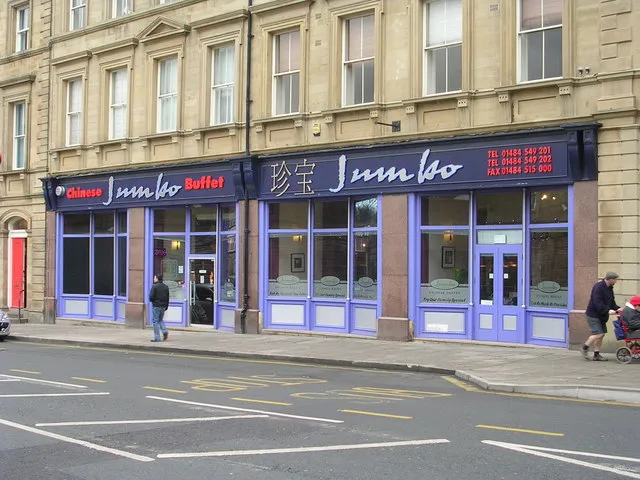
Photo: KAMEI SZE 2620M, CC0, via Wikimedia Commons
The Sunday roast is not just lunch. In Britain it is a mood, a calendar anchor and a mild national religion. The carvery queue, the Yorkshire puddings, the slightly tense negotiation over the last roast potato: it is all part of the ritual. But there is a rival, and it has been quietly filling its own tables for years. The Chinese buffet lunch deserves the same ritual status — not as a replacement for the roast, but as a genuine alternative for the Sundays when you want generosity without the wait.
This is not an attack on the roast. It is a defence of choice.
The roast is lovely; the queue is not
A set Sunday roast is a fixed script: starter, main, pudding, coffee, and a seating time that often comes with a polite nudge. A buffet lunch is a different kind of British Sunday: you arrive, you sit, and the table becomes the event. No waiting for courses. No hoping the kitchen has enough beef for the 2pm sitting. No quiet panic when one child announces they no longer eat gravy.
That matters in 2026. Family schedules are complicated. People are travelling further, working odd hours and trying to see grandparents, toddlers and teenagers in the same afternoon. A buffet lunch gives everyone at the table a vote. Grandma can have soup and steamed fish. Dad can have crispy duck. A seven-year-old can have chips and noodles. A three-year-old can have rice, cucumber and a frankly unreasonable amount of ice cream. Nobody has to negotiate the menu. That is not a compromise. It is good hosting.
A midday buffet is a more generous invitation
The word 'generous' is doing a lot of work here. A roast may be generous in portion, but a buffet is generous in possibility. You are not choosing from a list; you are choosing from a landscape. There is something quietly thrilling about a table where the next plate can be completely different from the last.
It is also, frankly, better value for mixed-age groups. A set roast for six people, with drinks and puddings, adds up quickly. A buffet lunch has a clear price, a broad choice and no awkward 'do we have another round of drinks?' calculation. In a cost-of-living era that has not exactly disappeared in 2026, that clarity matters. You know what you are spending, and everyone leaves full.
Regional variations: from Glasgow to Southampton
A buffet Sunday looks different depending on where you are. In Glasgow and Edinburgh, city-centre buffets often lean into a big family lunch: early sittings, loud tables and a dessert aisle that takes its duties seriously. In Manchester, Leeds and Sheffield, the Sunday buffet is often a pre-shopping or post-football affair, with a steady stream of groups who want something more interesting than a sandwich. In Birmingham and the Midlands, you will find some of the most confident buffet lunches in the country: big rooms, long counters and a mix of Cantonese classics, satay skewers and enough vegetarian options to keep everyone happy.
In Cardiff and Swansea, the Sunday buffet often has a relaxed, multigenerational feel: grandparents, parents and small children arriving together at noon. In London, the picture is more fragmented — a Chinatown buffet, a suburban all-you-can-eat, a hotel restaurant trying very hard — but the principle holds. The further you get from the carvery queue, the more the buffet starts to feel like a proper Sunday ritual.
Booking habits for 2026
The best buffet lunches are not always the ones you stumble into. In 2026, book ahead, especially for tables of six or more. Ask three questions: what time does the lunch buffet start and finish, is there a table turn time, and do you take deposits for big groups? If you have under-fives, ask about high chairs and whether the price changes at a certain age. If you have a mixed group, ask whether the Sunday menu is the same as the weekday one. It often is not.
The sweet spot is usually 12pm to 1pm. Arrive early enough to get the first fresh trays and leave before the 1.30pm rush. If you want a gentler pace, go at 12pm and take your time; if you want a quieter room, go at 1.45pm. Avoid the 12.30pm peak unless you enjoy queuing for the ice-cream machine behind eight children's birthday parties.
How to make it a monthly ritual
A ritual does not need to be weekly to count. Pick the first Sunday of the month, or the Sunday after payday, and make it the family default. Alternate the venue: one month a local Chinese buffet, the next a regional favourite you have been meaning to try. Let a different person choose the first plate each time. Bring a grandparent if you can. The point is not the food, or not only the food; it is the table.
A buffet Sunday also has a built-in escape hatch. If someone is late, they can still eat. If a toddler melts down, you can leave without derailing a three-course service. If a teenager decides they are vegetarian this week, there is usually something. That flexibility is not a small thing. It is the reason the buffet lunch keeps winning quiet converts.
The gentle heresy of a buffet Sunday
None of this means the roast should be retired. A good roast is a beautiful thing, and the British Sunday can hold more than one tradition. But the Chinese buffet lunch has earned its place at the table. It is generous, flexible and hospitable in a way that suits modern Britain. It asks less of you — no queue, no fixed menu, no pressure to order the right thing — and gives more back: choice, second helpings and a table that can stretch from high chair to grandparent.
So next Sunday, try it. Book a table for noon, take the family, and see what happens when the roast has a rival. You may not abandon the carvery forever. But you may find that the buffet lunch becomes the tradition you did not know you were missing.