The Sauce Station Is Not a Soup Course: A Field Guide to Britain's Most Misused Buffet Aisle
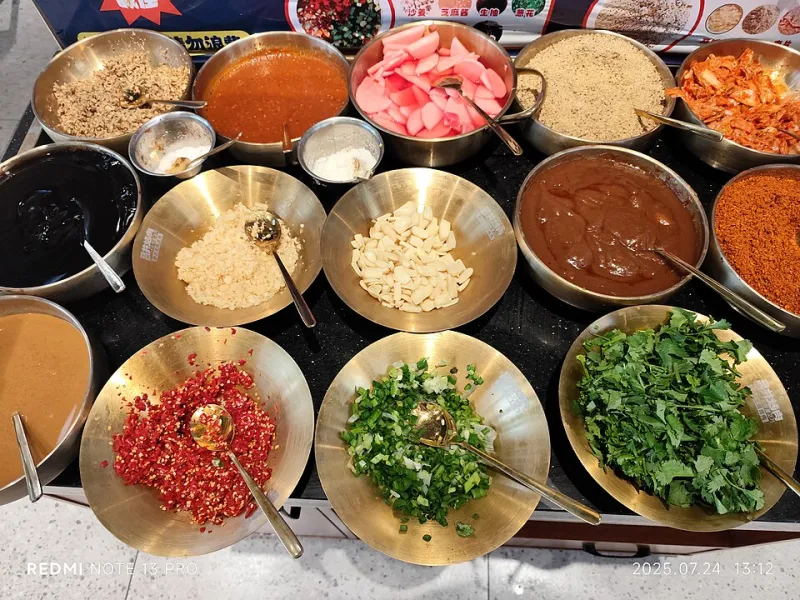
Photo: HOISAIWIM TUNGWAH, CC0, via Wikimedia Commons
There is a stretch of counter in every Chinese buffet in Britain that gets less attention than it deserves. It usually sits just past the prawn toast, somewhere between the duck and the dessert fridge, and it involves a row of steel trays, a stack of small white bowls and one ladle that is always slightly too big for its container. The sauce station.
Most people give it eight seconds. They should give it a minute.
Here is the thing: the buffet itself is largely fixed. The kitchen decides how the chicken balls come out, how salty the salt-and-pepper chips are, whether the seaweed is green or alarmingly dark. The sauce station is the one part of the meal where you are genuinely in charge. Get it right and a decent buffet becomes a very good one. Get it wrong and you are effectively eating sweet-and-sour soup with a fork.
The line-up, decoded
Most UK Chinese buffets run a fairly standard cast. The names are familiar; what they actually do is less so.
Black bean. Salty, fermented, faintly funky, with a hit of garlic behind it. The most grown-up sauce on the counter, and it loves beef, prawns and anything with a bit of char on it.
Satay. Peanut, coconut, a warm hum of spice. Rich and slightly sweet, brilliant with skewers and chicken, and dangerous in quantity because it thickens as it cools and turns a plate into peanut butter.
Sweet and sour. The national favourite and the most over-applied. Sugary, glossy, and capable of burying anything it touches. Treat it as a dip, not a flood.
Chilli oil. Not just heat. There is usually a toasted, savoury depth under the burn. A teaspoon transforms noodles; four teaspoons transform your evening.
Garlic and spring onion, or ginger and spring onion. The quiet hero. Fresh, sharp and green, and it makes plain rice or tired steamed greens taste like a decision you made on purpose.
Oyster sauce. Savoury, rounded, gently sweet. The natural partner for pak choi, broccoli and any vegetable that has been sitting under a lamp for a while.
Plum. Fruity, sticky, built for duck and anything with a crisp edge.
Curry. Mild, yellow, coconut-adjacent. Chips. Obviously chips.
Lemon or orange. Sharp and sweet, usually intended for chicken. Fine in a small puddle at the side of the plate.
Match the sauce to the plate
A rough field guide for the indecisive:
- Crispy duck and pancakes → plum, with a dab of hoisin if it is on offer
- Chicken or prawn balls → sweet and sour, on the side, dipped not drowned
- Beef in any form → black bean
- Skewers, wings, anything on a stick → satay
- Noodles, fried rice, dumplings → chilli oil plus a spoon of garlic and spring onion
- Steamed greens, pak choi, broccoli → oyster sauce
- Chips → curry sauce, and no one gets to argue
- Plain rice → a little of whatever you chose for the main event, plus soy
Layering, not flooding
The most common buffet error is treating sauce as a liquid topping rather than a seasoning. A rule that works: two spoons maximum per plate, and never more than one wet sauce per item.
Think of the plate in zones. One side dry — duck, skewers, crackers, anything that should stay crisp. One side wet — rice, noodles, vegetables, which can take a drizzle. Keep the sauce in a small bowl beside the plate wherever the venue provides one, and dip. A buffet that puts out little white bowls is quietly telling you something.
If you do pour, pour late. A chicken ball under sweet and sour for ninety seconds is a chicken ball under sweet and sour. The same ball under it for ten minutes is a collapsed thing with a soggy jacket and no future.
Five things to stop doing at the sauce station
- Saucing before tasting. You do not know how heavy-handed the kitchen has been today. Taste first, adjust second.
- Using one ladle across three trays. Cross-contact is real, and the person behind you with a shellfish allergy will thank you for the extra second it takes.
- Treating chilli oil as a dare. It is a condiment, not a personality test.
- Double-dipping a half-eaten spring roll. This is exactly what the small bowls exist to prevent.
- Leaving the lids off. Sauce dries, skins over, and the next person gets a crust instead of a condiment.
Worth adding: hovering at the station with a full plate and no plan is the single biggest cause of buffet traffic jams. Step back, decide, then move in.
A plate that actually works
Start with a small bowl of chilli oil and a small bowl of plum. Put crispy duck and a couple of skewers on the dry half of the plate, plain rice and greens on the wet half, and a modest pour of oyster sauce over the greens only. Dip as you go. Halfway through, go back for noodles and add a teaspoon of garlic and spring onion — a teaspoon, not a ladle. You will finish the plate and still have room for banana fritters, which is the entire point of being there.
The real making-or-breaking moment
Every buffet has a moment where the meal either comes together or flattens out, and it is almost always this one: standing in front of a row of steel trays with a ladle in your hand. The kitchen has given you the ingredients. The sauce station is where you decide what kind of dinner it is going to be. Take the extra minute. Your plate will thank you — and so will whoever is waiting behind you.